

The House Edge The Canadian casino field guide19+
BETNOVA: ONTARIO + ALBERTA CONFIRMED PER AGLC REGISTRANT LIST ♥TOP-10 REGULATED BOARDS FILED FOR ONTARIO + ALBERTA ♦BETWAY: LIVE IN ALBERTA, LATE SEPTEMBER ♠QUEBEC: CROWN MONOPOLY NEARS THE BALLOT BOX — OCT 5 ♥HOUSE EDGE EXCLUSIVES — NONE ON FILE YET (NONE INVENTED) ♦AGCO FINED PRAGMATIC PLAY + RELAX GAMING C$40K EACH IN MAY ♣FIGURES RE-CHECKED 2 OCT 2026 ♥

Home›The Playbook — Long Reads on RTP, Payouts & Bonuses


♠ The Playbook · long reads

Four articles worth an evening.

The mechanics behind the register, written for players who like to know what they’re paying for.

NUMBERS · 6 MIN

RTP, house edge and variance — in plain English

What a 97% figure actually promises (almost nothing about tonight) and why variance, not edge, runs your evening.

Editorial illustration: a roulette-wheel dial raining probability dots into a glass bowl above two dice, in deep green, ivory and copper

Sooner or later every player meets a figure like 97.39% — the reported win rate of the casino at the top of this month’s board. It looks like a promise. It isn’t one. It is an average taken over millions and millions of wagers, and understanding the three ideas hiding inside it will change how you play.

RTP is the rate, not the receipt

Return to player, or RTP, answers a boring but crucial question: of all the money ever wagered on this game, how much comes back to players? A 97% slot returns C$97 of every C$100 — over its entire lifetime. That average will never describe your Tuesday. You might pull ahead by C$200 in twenty minutes; the next player funds it.

That’s the first honest sentence of this entire guide: a high reported win rate tells you which rooms are structurally fairer, and nothing else. Betway at 98.78% holds less of your money, on average, than a room at 97%. It says nothing about tonight’s hockey game of slots.

House edge is the price of the ticket

House edge is the mirror number: 100 minus RTP. A 96% slot has a 4% edge, and the edge has a marvellous property you can actually use — it predicts your average cost per hour. Bet C$2 a spin at 400 spins an hour on a 4% edge, and the arithmetic says you’re spending roughly C$32 an hour. Our Ledger calculator does this math for you; it’s the closest thing to a slot-machine price tag that exists.

“Treat the edge as a rental fee for entertainment. If the hourly number makes you flinch, the bet size is wrong — not the game.”

Variance is the weather

If RTP is the climate, variance is the weather. Slots are stormy: long dry spells punctuated by sudden waterfalls. Blackjack, played with basic strategy, is drizzle: more even, smaller swings. Two games with identical RTP can feel like different planets.

  • High variance (most slots, progressives): budget for droughts. Size your bets so a cold hour doesn’t end the night.
  • Lower variance (blackjack, baccarat, video poker): smoother ride, edge applies more ‘instantly’ to your session.

Use reported win rate to rank games and rooms; use variance to size your bets; use deposit limits to decide the evening’s actual cost. In that order.

The desk’s parting arithmetic: none of these ideas make winning more likely. They make the cost honest — and an honest cost is the difference between a hobby and a bad habit.

BANKING · 7 MIN

From balance to bank: how Canadian payouts actually move

Why your first withdrawal is always the slow one, why Interac is the Canadian gold standard, and how to cut days off the wait.

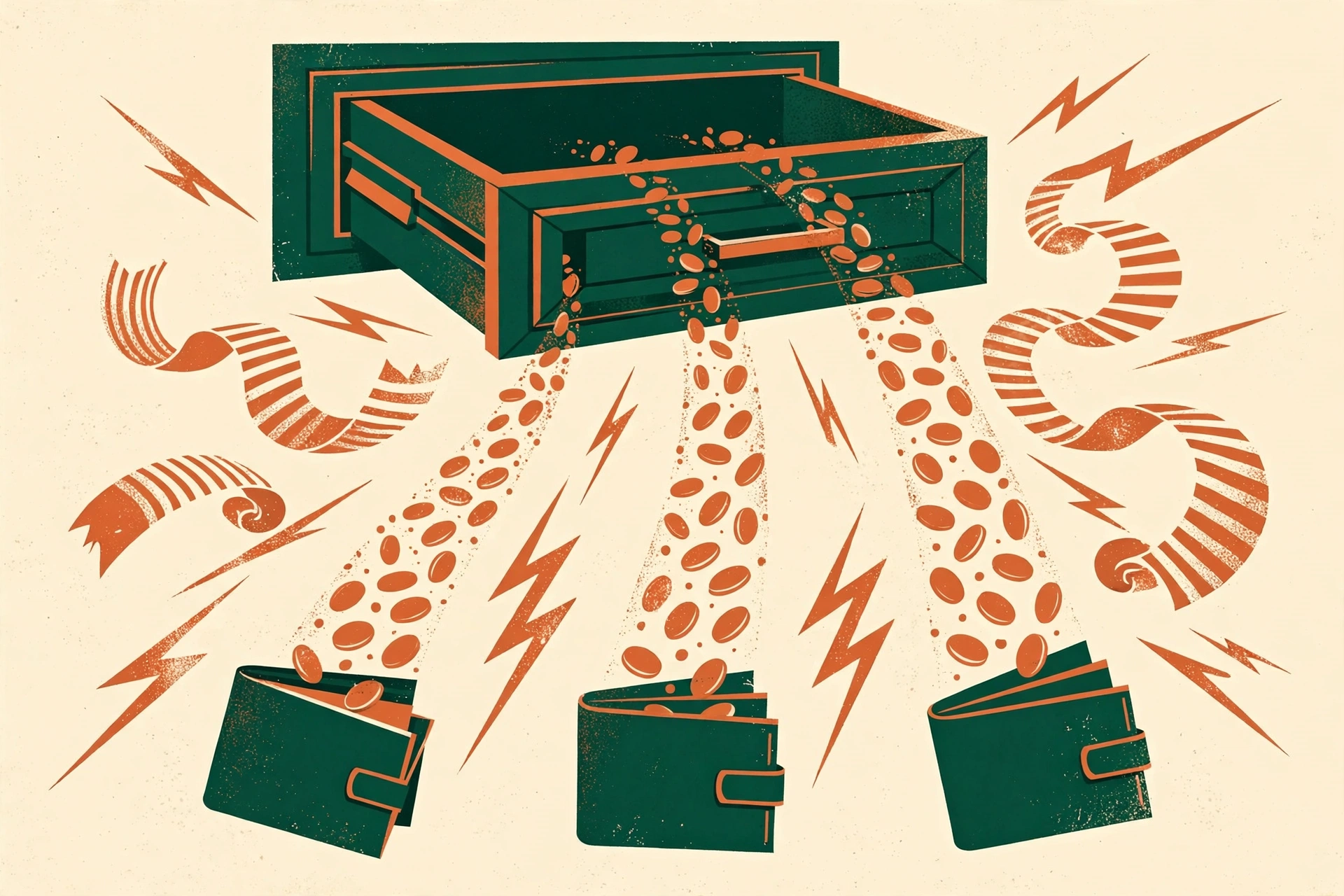
Editorial illustration: copper coins pouring from a green bank drawer into three green wallets, motion lines and receipts swirling, in deep green, ivory and copper

Depositing money is designed to feel effortless. Withdrawing it is designed to feel secure — and secure runs on rails, checks and paperwork. Here’s the honest route your money takes from the balance to your account.

The pipeline has four stages

Request → pending → verification → rail. First you click withdraw. Then the operator holds the request in a pending window — usually 0 to 24 hours — so you can reverse it (don’t) and so fraud checks run. Then comes identity verification: a quick document check, usually once per account. Finally the money enters the payment rail and arrives in hours or days depending on the method.

“Your withdrawal isn’t slow. Your verification is slow — and it’s fastest when you’ve already done it.”

Why the first withdrawal always drags

Every licensed operator must know its customer. First payouts commonly add one to three business days while documents are checked — BetMGM’s reported 24–48 hour Interac window is explicitly once verified. Bonus tip from the desk: verify your account and withdrawal method on day one, while you’re patient. Your future self, the one who just hit a big line, will thank you.

The Canadian rails, ranked by speed

  • Crypto (the grey-market rail): near-instant movement, with volatility as the tax. The register doesn’t rank rooms it can’t vouch for, so this lane stays off the shelf.
  • Interac (the Canadian standard): the sharpest regulated rooms land in 24–48 hours; most land in one to three days.
  • E-wallets: inside a day at the fast rooms.
  • Cards and bank transfer: the slow lane — up to five business days in the register’s reported range, and weekend banking is still banking.

Three ways to get paid faster

One: verify identity on day one, as above. Two: withdraw to the rail you favour — Interac for speed. Three: don’t drip: many operators attach per-transaction checks, so one consolidated withdrawal often beats five small ones. And the classic: never let pending-window impatience push you into reversing the withdrawal “for one quick session.” That’s not a payout anymore; it’s a relapse.


FINE PRINT · 6 MIN

Read a bonus like a lawyer

Four numbers decide whether a bonus is a gift or a part-time job. Here’s the five-minute audit we run on every offer.

Editorial illustration: a brass magnifying glass with circled clauses over fine-print squiggle lines and fanned green ticket stubs, in deep green, ivory and copper

A bonus is a contract with confetti on it. The confetti — the headline percentage and the big number — is the least important part. What decides whether the bonus is worth touching are four dry numbers buried two scrolls down.

The four numbers that matter

1. The match and the cap. “100% up to C$1,000” means the operator matches your deposit in bonus credit, and won’t credit more than C$1,000. Percentage sells the excitement; the cap sells the actual ceiling.

2. The wagering multiple. This is the bill: how many times the bonus must be bet before it can leave your account. “30×” on a C$100 bonus means C$3,000 of total bets first. Lower multiples win every time — the fewer turns a bonus must make, the closer it is to something real.

3. The scope. Two small words that double your bill: deposit plus bonus. A C$100 deposit with a C$100 bonus at 25× “on deposit plus bonus” is C$5,000 in required bets; the same 25× “on the bonus only” is C$2,500. Check the scope line every time: “bonus only” earns the green pencil; “deposit-plus-bonus” gets the yellow one.

4. The expiry and the weighting. How long you have matters — most welcomes give you 30 days. And game weighting: slots usually count 100% toward the requirement; table games often count 10% or less. The smallest print of all is usually the maximum bet while wagering: breach it and the operator can void the bonus and its winnings.

“A bonus with 40× on deposit-plus-bonus isn’t a gift. It’s a job — and it pays below minimum wage.”

The Ontario/AB wrinkle

In Ontario and Alberta, regulators keep bonus offers off public advertising pages, so you’ll see them only inside your account. Nothing sinister: impossible-to-complain-about is how a regulated market likes it. But it means our Wire tickets can’t quote ON/AB versions of offers — the terms you agree to are the ones on screen when you opt in.

The five-minute audit

Before you touch any welcome: find the wagering multiple, check the scope (bonus only = green, deposit-plus-bonus = yellow), read the expiry and the max bet. If any of it is missing, that absence is the answer — and the room doesn’t deserve the desk’s Bonuses points either.


REGULATION · 8 MIN

Ontario and Alberta: the two-speed Canadian market

Two provinces run full regulated iGaming markets now. Everyone else runs something leaner. Here’s what that means for your money.

Canada doesn’t have an online gambling market. It has provinces, each with opinions — and since 2022, two of them run full-blown regulated markets that change what players can expect.

Ontario: the template

On 4 April 2022, Ontario became the first province to license private iGaming operators, through iGaming Ontario — a subsidiary of the Alcohol and Gaming Commission of Ontario (the AGCO). Operators in Ontario’s market hold AGCO licences (LeoVegas’s, for instance, is OPIG1337312), submit to Ontario advertising rules — which keep bonus offers inside accounts rather than on billboards — and fund player protections like the province’s centralized self-exclusion tool, BetGuard.

The regulator isn’t decorative. In February 2026 the AGCO suspended PointsBet’s licence, and in May 2026 it fined the suppliers Pragmatic Play and Relax Gaming C$40,000 each. Licensed means supervised, and supervised has teeth.

Alberta: the newcomer

On 13 July 2026, Alberta’s regulated market opened under the AGLC. Before launch, roughly 70% of the province’s online play flowed through unregulated operators; the licensing program aims to pull that into supervised, taxpaying territory. Betway and BetMGM are already live there — and their desktop-level presence is one reason the desk re-weighted both upward this month.

“A licence is a promise written in regulatory concrete: an operator you can complain to someone about. That complaint path is worth more than any bonus headline.”

Everywhere else

In the other provinces, offshore brands take Canadian players openly — but this register files only the rooms a province has signed for. They’re licensed — Tobique, Curaçao, or offshore regimes — but your provincial regulator isn’t involved in the relationship, so double the diligence: check the operator’s licence page yourself and verify a working support desk before your first deposit.

What changes for you, province by province

  • Ontario / Alberta: bonus offers live inside accounts, markets are supervised, and licence numbers are public. Read the licence page; dispute paths exist.
  • Everywhere else: operators may exclude you from specific offers if you roam — in regulated markets the offer inside your account is what counts.
  • All provinces: your winnings are generally untaxed, and a complaint about an offshore room never carries the weight of one about a licensed operator.

The trend line is one-way: more provinces are watching Ontario and Alberta. Where regulation lands, markets get calmer, ads get quieter and players get somebody to call. As licensing spreads, the desk’s Trust pillar gets sharper — and the register follows.

On the table